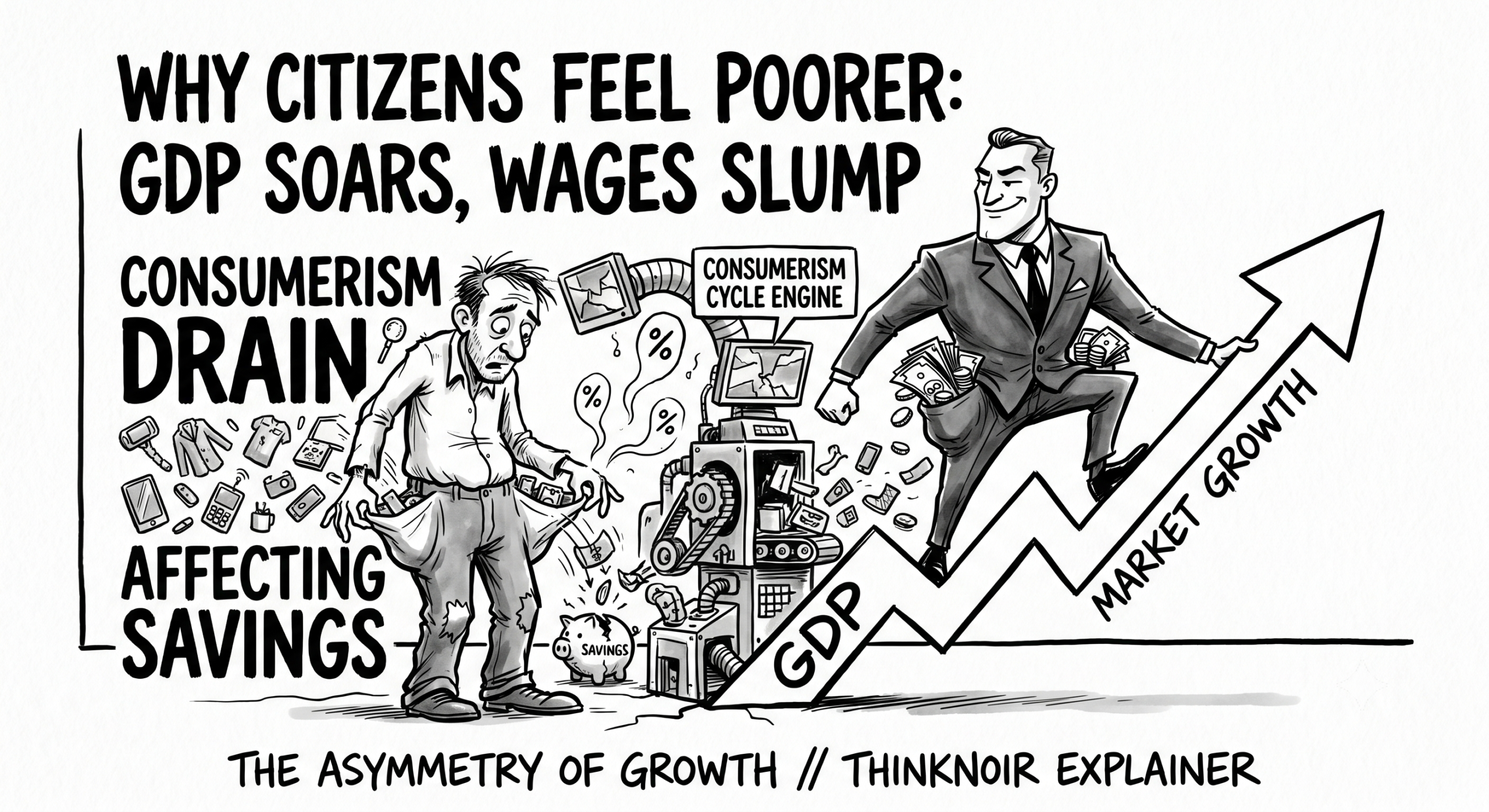
Blog post: Why do citizens feel poorer despite economic growth? Explores inequality, inflation, housing, and social media’s role.
Citing sharp localized friction and federal overreach, Tamil Nadu’s ruling Dravidian political machinery chose to skip a high-profile New Delhi summit. A protest that may seem theatrical — but one that hands a permanent structural argument back to the states. It is a reminder that growth announced from the centre often feels invisible on the ground.
If the World Is Getting Richer, Why Do So Many People Feel Poor?
Economic growth and personal prosperity are not the same thing. A country can report 8% GDP growth, record corporate profits, and a booming stock market — while millions of households simultaneously feel the walls closing in. This disconnect is not an accident. It has causes. And most of them are hiding in plain sight.
This piece explains exactly why citizens feel poorer despite economic growth, who benefits, and what the data misses entirely.
Citizens feel poorer despite economic growth because GDP measures what the economy produces — not what ordinary households can afford. Growth increasingly concentrates among corporations, investors, and asset owners. Meanwhile, wages grow slowly while housing, healthcare, and education costs rise sharply. Official inflation understates the daily financial burden. Add geopolitical shocks, automation squeezing jobs, rising consumerism, and social media-driven comparison — and even higher incomes feel insufficient. The question is no longer “how fast is the economy growing?” It is “who is actually benefiting from that growth?”
Growth Is Happening — Just Not for You
Imagine the economy grows by 8%. A reasonable person expects to feel that. The problem is where that 8% actually lands.
It overwhelmingly flows to large corporations, investors, asset owners, and high-income professionals. Factory workers, gig workers, entry-level employees, and small business owners receive the thinner end of the wedge.
This is not new. For decades, a growing share of economic gains in most major economies has flowed to the top decile. In India, the wealthiest 10% now capture more than 57% of national income according to World Inequality Database estimates — while the bottom 50% hold less than 15%. Growth is real. Distribution is the problem.
Wages Cannot Keep Up with What Life Actually Costs
This is perhaps the single biggest reason citizens feel poorer despite economic growth. Workers may receive salary hikes of 5–8% per year. But actual living expenses often climb far faster.
If wages grow 6% but household expenses rise 9%, you are effectively earning less.
This gap between nominal wage growth and real cost increases is the engine behind the feeling of impoverishment during boom times. And the burden falls hardest on the middle class — too prosperous to qualify for subsidies, too stretched to build savings.
Housing costs alone explain much of this. A generation ago, a single income could support a home purchase. Today, young adults in Mumbai, Chennai, or Bengaluru face property prices at 30–40 times annual household income in prime areas. Higher earnings haven’t kept pace.
Inflation Hits Daily Life Harder Than the Official Number
Official inflation is an average. It weighs the cost of televisions alongside the cost of vegetables. It includes categories where prices fall — electronics, software, clothing — alongside categories where they rise sharply.
But families don’t buy televisions every week. They buy groceries, pay rent, cover school fees, and visit doctors. “Personal inflation” — the cost increase families actually experience in daily spending — almost always exceeds the official Consumer Price Index.
When citizens say “everything is so expensive now,” they are not misremembering. They are accurately reporting their own household inflation — which the aggregate CPI simply does not capture.
Growth No Longer Creates Enough Good Jobs
Historically, industrial expansion meant more workers on the floor. More factories meant more livelihoods. That relationship has fractured.
Automation, AI, and software allow industries to scale output without scaling headcount. A logistics company can move twice the parcels with the same number of drivers, aided by better routing software. A bank can serve millions more customers without opening branches. The economy grows. The payroll doesn’t.
For India specifically, this is acute. The economy is creating jobs — but increasingly in the gig sector, contract work, and informal employment, which offer little security and no benefits. Citizens hear “the economy is booming” on the news while their family member struggles to find stable work. The cognitive dissonance is real.
Geopolitics and Uncertainty Make Everything More Expensive
Citizens don’t only pay for domestic economic conditions. They pay for the world.
The Russia–Ukraine conflict disrupted global wheat and sunflower oil supplies. Middle East tensions push fuel prices higher. Trade disputes between the US and China raise the cost of electronics components. Every supply chain disruption adds a small premium — but thousands of small premiums add up to a meaningfully higher cost of living.
India imports over 85% of its crude oil. When global prices spike, fuel, transport, and food prices follow domestically — regardless of how well the Indian economy is performing. Citizens feel the hit without understanding why it’s arrived.
Political uncertainty compounds this. When policy changes frequently, businesses delay hiring and investment. Citizens become cautious. Confidence falls. And economic security is as much about confidence as it is about income.
Social media has rewired our benchmark for “enough.” Thirty years ago, people compared their financial lives with neighbours, colleagues, and relatives. Today, they compare with Instagram entrepreneurs, YouTube millionaires, and influencer lifestyles. Economists call this relative deprivation — you feel poorer because others appear richer, even if your absolute standard of living has improved.
This is not a superficial point. Research consistently shows that subjective financial wellbeing correlates more strongly with relative position than absolute income. A salary of ₹1 lakh feels different if your peers earn ₹60,000 versus ₹3 lakh. The economy’s growth doesn’t change that psychological reference point.
Younger generations also face lifestyle inflation — rising income meets rising expectations. More streaming subscriptions, frequent phone upgrades, premium food delivery, travel. Spending expands alongside earnings. Higher incomes don’t automatically produce higher savings or security.
Why It Matters — and What Comes Next
When citizens feel economically left behind despite growth, trust in institutions erodes. Populism rises. Regional political movements gain momentum — like the Dravidian parties in Tamil Nadu, which have long channelled the frustration of citizens who see national growth statistics as detached from their daily reality.
That summit boycott is not just politics. It is an expression of a structural grievance: that economic gains flow disproportionately toward the national centre — toward Delhi, toward large capital cities, toward those who already own assets — while states that generate significant output see inadequate returns in welfare, wages, and infrastructure for ordinary people.
The financial stress caused by this disconnect is measurable. Savings rates among younger working Indians are falling. Personal debt is rising. Emergency financial buffers — the ability to absorb a job loss or medical bill — are thin. People who earn more than their parents did at the same age cannot buy homes, cannot build the same safety nets, and cannot access the same quality of education or healthcare without significant financial strain.
This is not a perception problem. It is a structural one. And the growing political demand for fiscal federalism, for redistribution, for state-level autonomy, is citizens speaking economically through the only channel available to them: their vote and their representatives’ refusal to attend summits.
Economic growth is not a lie. It is simply an incomplete truth.
GDP tells you the size of the pie. It tells you almost nothing about how the slices are distributed, how much you personally can afford, or whether the life you work toward is actually becoming more or less achievable.
Citizens feel poorer despite economic growth because the gains are increasingly disconnected from household financial wellbeing. The economy expands. Wages lag. Housing soars. Healthcare costs compound. Jobs shift toward insecurity. Assets — owned mostly by the already-wealthy — appreciate fastest. Social media turns modest prosperity into a feeling of failure.
The most important economic question of our time is no longer “how fast is the economy growing?” It is “growing for whom?”
Until that question gets an honest answer — in policy, in budget allocations, in wage structures — the feeling of impoverishment will persist, regardless of what the GDP headline says.
Related Posts
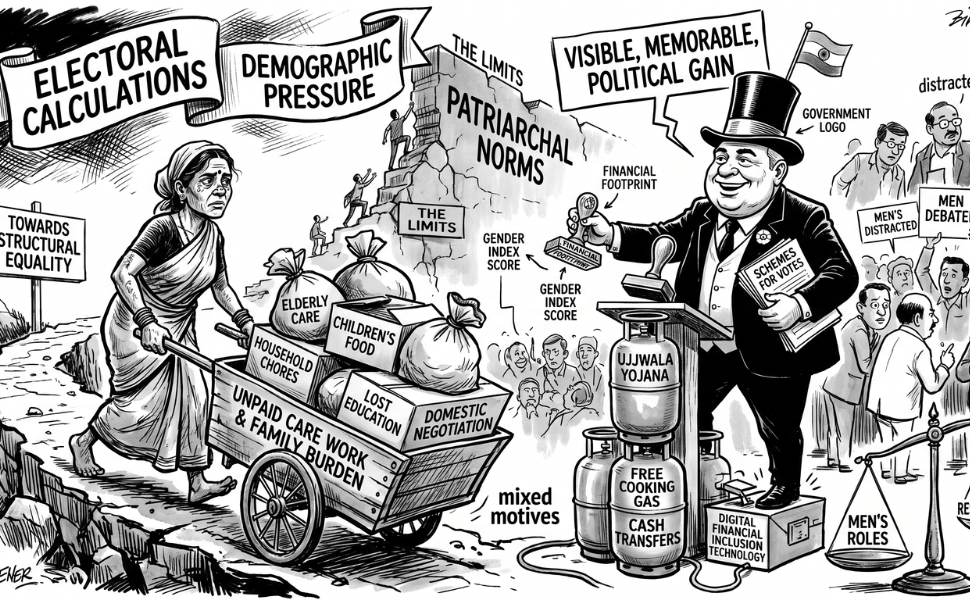
Why Are Women-Focused Welfare Schemes Increasing Across the World?
Blog post: Why are women-focused welfare schemes increasing? Politics & Policy 11 min read · ~2,500 words Governments aren’t suddenly becoming feminist. They’re becoming pragmatic. […]
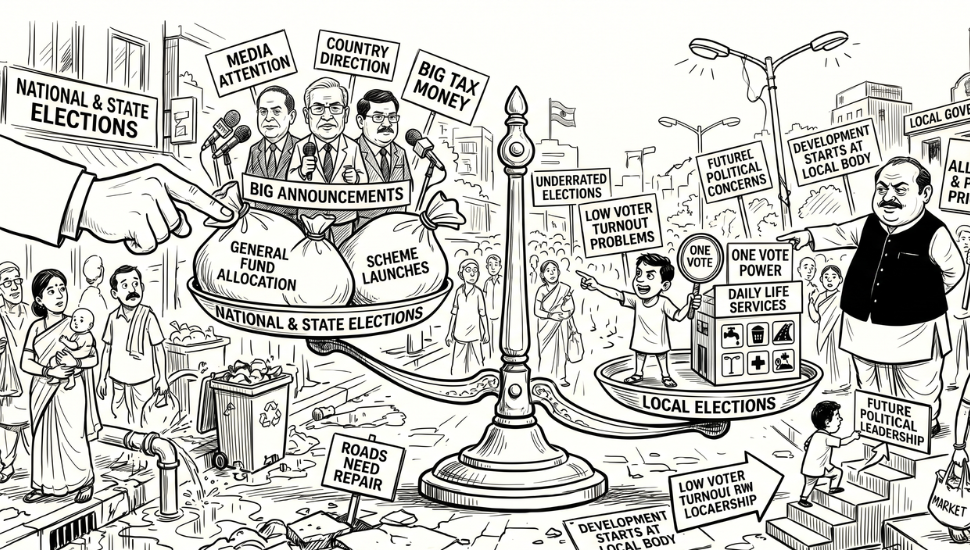
Why Are Local Elections More Important Than People Think, but political parties work hard to win them?
Political Analysis The Real Reason Political Parties Fear Losing Local Elections The vote that fills a pothole, fixes your water pipe, and decides which school […]
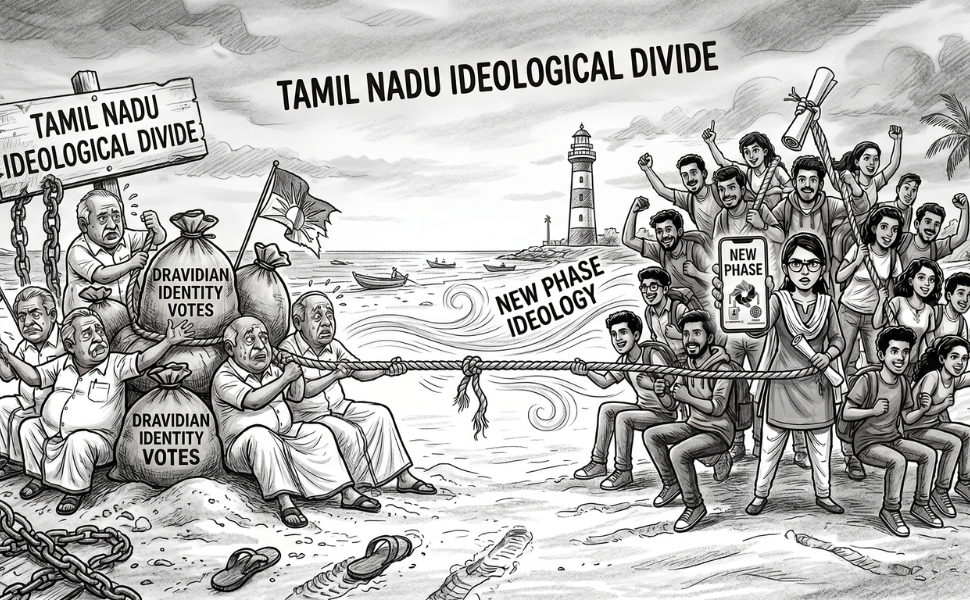
Why the 2026 Assembly Election Forced Re-alignments in Dravidian Coalition Math
Blog post: Why the 2026 Assembly Election Forced Re-alignments in Dravidian Coalition Math Tamil Nadu Politics · May 2026 Is this hung Assembly is a […]